The "Appetite Algorithm": F&B Social Media Trends for 2026
In my analysis on Digital Marketing for 2026, we discussed the massive shift from the "Traffic Economy" to the "Answer Economy." Nowhere is this shift more violent or more profitable than in the Food & Beverage industry.
For restaurants, cafes, and food brands, social media is no longer just a "discovery channel." It is your menu, your reservation desk, and your customer service team all rolled into one. In 2026, we are seeing a rejection of the "perfectly curated" aesthetic. The days of overhead lighting setups and saturation-boosted avocado toast are dead.
AUTHENTICITY is the new currency.
In this deep dive, you’ll learn exactly how the F&B landscape is pivoting toward "Sensory Search" and "Raw Storytelling," and why your restaurant’s survival depends on adapting to these shifts.
Trend 1: The Death of the "Foodie Aesthetic"
For the last decade, "Instagrammable" meant perfect. It meant bright lights, clean tables, and food that looked like plastic. In 2026, Gen Z and Alpha consumers view perfection as a lie.
The "Lo-Fi" Revolution Consumers now associate high-production value with AI-generated content or corporate advertising. If your video looks too polished, they scroll past it. They crave "Lo-Fi" content that shaky camera movements, ambient kitchen noise, and imperfect plating.
Why "Ugly" Works Better Data shows that "Raw" content which filmed on a phone, minimal editing has a significantly higher retention rate than polished commercials. It feels like a FaceTime call from a friend recommending a spot, rather than a brand trying to sell something.
The Strategy Stop hiring expensive production crews for your daily Reels. Hand an iPhone to your chef. Show the sauce spilling. Show the burnt edges. Show the chaos of a Friday night service.
Trend 2: Sensory Search (vSEO)
This is essential if you want to rank in 2026. Your customers are not Googling "Italian restaurant near me." They are searching TikTok for "creamy carbonara Bangkok" and looking for visual proof.
Video is the New Google Social platforms have become "Video Search Engines." Algorithms can now "listen" to the audio in your video and "see" the ingredients on the plate. If you don't speak your keywords and show them clearly, you are invisible.
The "ASMR" Factor Sound is just as important as visuals. The sound of a crust breaking, a drink pouring, or a steak searing triggers a biological response (ASMR) that static images cannot achieve. This "Sensory Marketing" is the most powerful tool you have to stop the scroll.
Make them hungry in 3 seconds. Don't sell the food. Sell the feeling. Audio is 50% of the video experience.
Utilizing Sensory Video and local SEO strategies can significantly enhance your restaurant's foot traffic and table turnover by targeting the right "micro-moments."
How to execute the "Raw" Content Strategy:
-
Ditch the Gimbal: Film handheld to create a sense of presence and reality; let the viewer feel like they are sitting at the table.
-
Audio First: Capture the sizzle, the chop, and the clink of the kitchen; avoid generic royalty-free music.
-
Post Immediately: Don't let content sit in a folder for weeks. Relevance beats perfection every time.
This tool helps with:
-
Trust: Customers see the real kitchen hygiene and quality, reducing "food anxiety."
-
Retention: "Messy" videos hold attention longer than static images because they tell a story.
-
Conversion: Viewers can "taste" the food through the screen, driving immediate reservation clicks.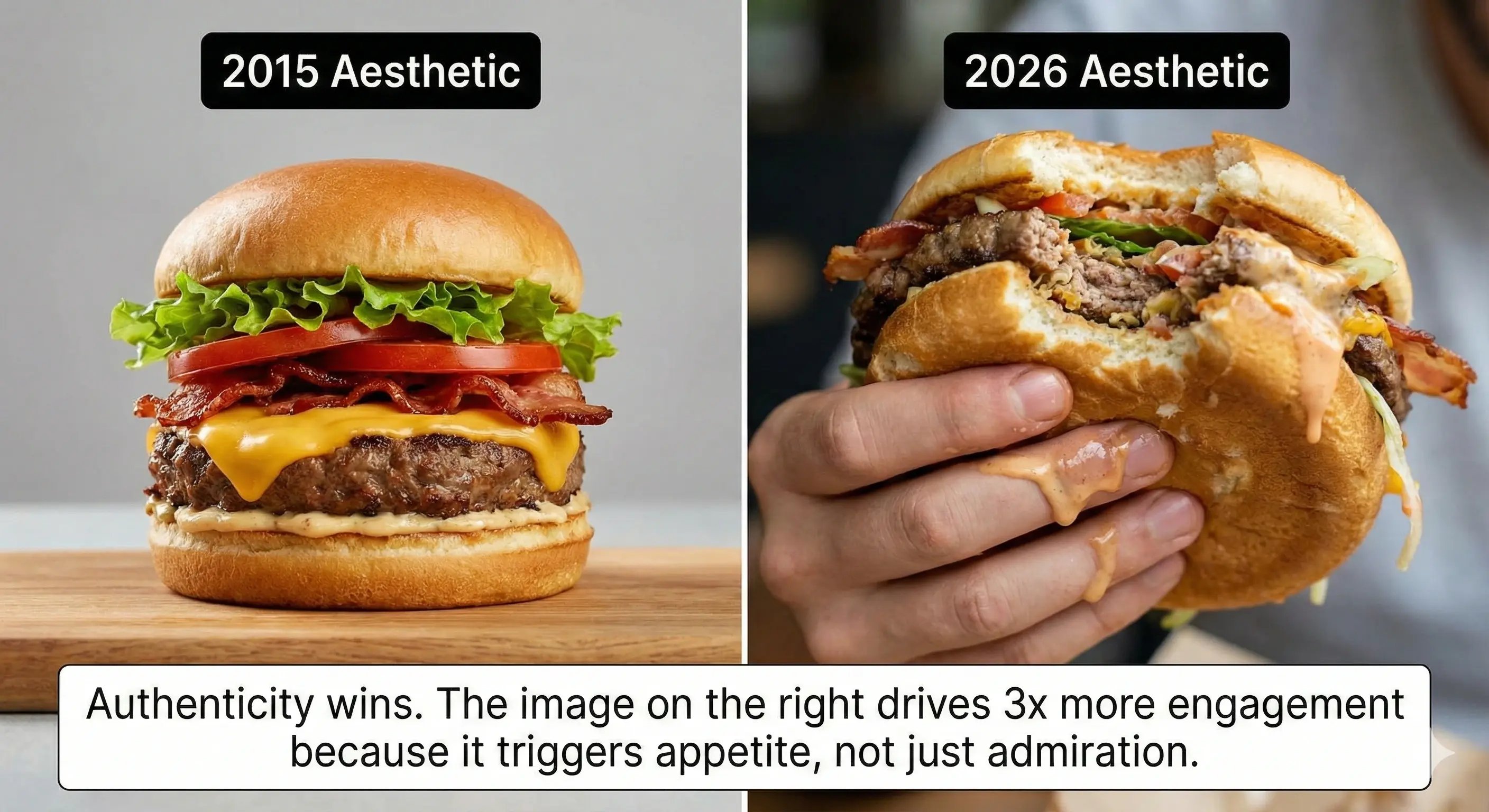
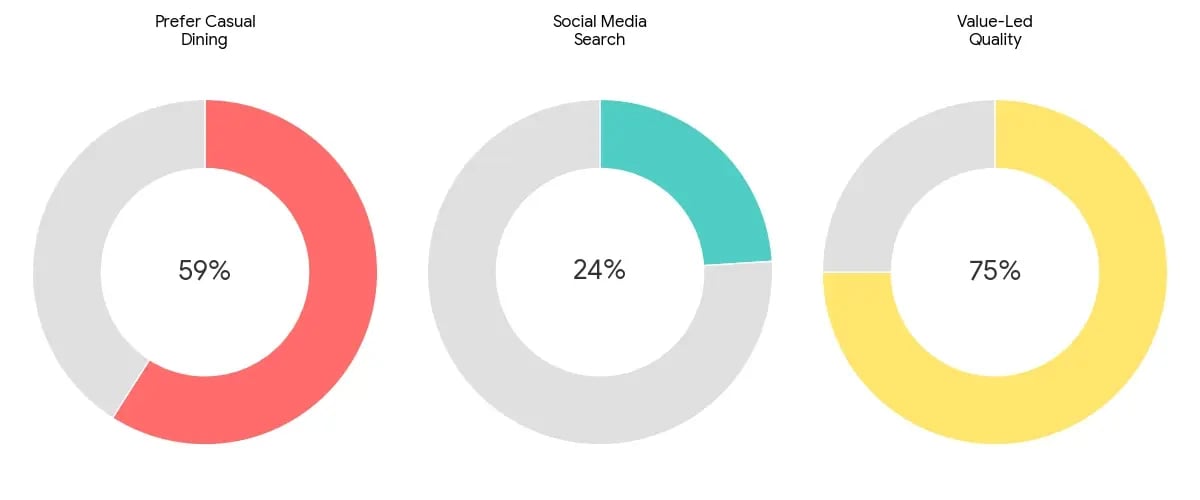
Here are the pie charts representing the dining trends:
-
59% Prefer Casual Dining: This highlights the shift towards relaxed sociability over formal settings.
-
24% Social Media Search: A growing segment is bypassing traditional maps for discovery via social platforms.
-
75% Value-Led Quality: The Treatonomics effect shows that while customers are price-sensitive, they refuse to compromise on ingredient quality.
Trend #3: "Treatonomics" & The Micro-Luxury Shift
Economic pressure has changed how people spend, but it hasn't stopped them from spending. It has just changed what they buy.
The Lipstick Effect on a Plate Consumers are trading down on big purchases (houses, cars) but trading up on small indulgences. This is "Treatonomics." A customer might not be able to afford a vacation to Italy, but they can afford a $18 premium tiramisu.
Zebra Striping A fascinating sub-trend is "Zebra Striping"—where diners alternate between alcoholic cocktails and premium non-alcoholic mocktails in the same sitting. They want the "buzz" of the atmosphere without the hangover, and they are willing to pay premium prices for complex, alcohol-free drinks.
Trend #4: Radical Transparency (Farm to Feed)
In 2026, trust is fragile. Customers are skeptical of greenwashing. They want proof.
The Source Code Menus in 2026 will feature QR codes not just for ordering, but for sourcing. Customers want to scan a code and see the specific farm where the vegetables grew or the boat that caught the fish.
Behind-the-Scenes (BTS) is the Main Event Show your suppliers. If you buy coffee beans from a local roaster, film the pickup. If you make your pasta fresh every morning at 5 AM, time-lapse it. This "Radical Transparency" builds a brand moat that competitors cannot copy.
"In 2026, taste trumps everything. But on social media, you can't taste. You have to make the viewer feel the taste through texture and sound." — Ni Htoo Kyaw, F&B Digital Marketing Strategist & Analyst